Getting emotional about Open Data

Open Data is a hot topic. Almost everybody seems to agree that making local data available to the public makes perfect sense. No doubt, citizens benefit from the increasing transparency of processes in their city, but the publication of this data also brings up some questions that are uncomfortable for those private corporations that gather all our individual data and use it without our explicit permission. One of the core question is who should own the data that we produce as citizens and individuals: The institutions collecting the data that we generate through our use of their systems and services or we, the data producers, ourselves. Shouldn’t those banks, phone companies, credit card services, doctors, shops, network providers, internet retailers, search engines at least provide transparency of what they actually do with the data, thus giving us the chance to decide whether we want to use their services under those circumstances or not. Should they not provide us with access to the data produced by us, so we can monitor ourselves better and maybe improve our own recording systems and simplify our tax statements for example?

At the same time, we already suffer from such an overload of information, that perhaps only a minority of people would actually access ‘their’ data and make use of it. The same applies to the public data that is already accessible. Who but those who have an affinity to data are looking up public data sets that are made available and even make use of them? This is where data visualisation can help. Data visualisation is a medium which emphasises specific aspects of the given data and offers a particular reading of it. Thus it becomes an expressive an powerful communication tool, that can even create a new reality. Numerous groups like WE LOVE OPEN DATA and individuals worldwide have started to visualise open data for the public good, driven by their own curiosity and philanthropism.

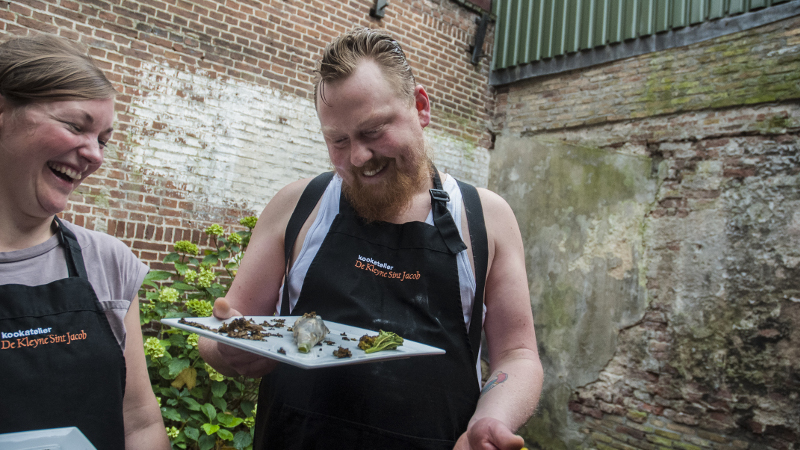
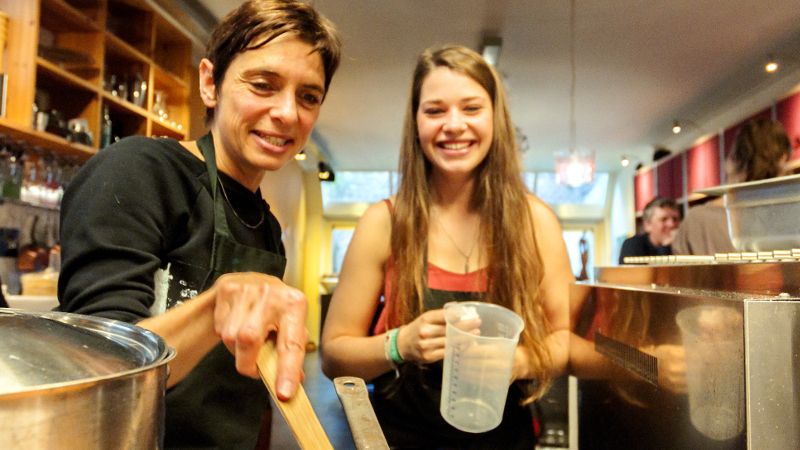
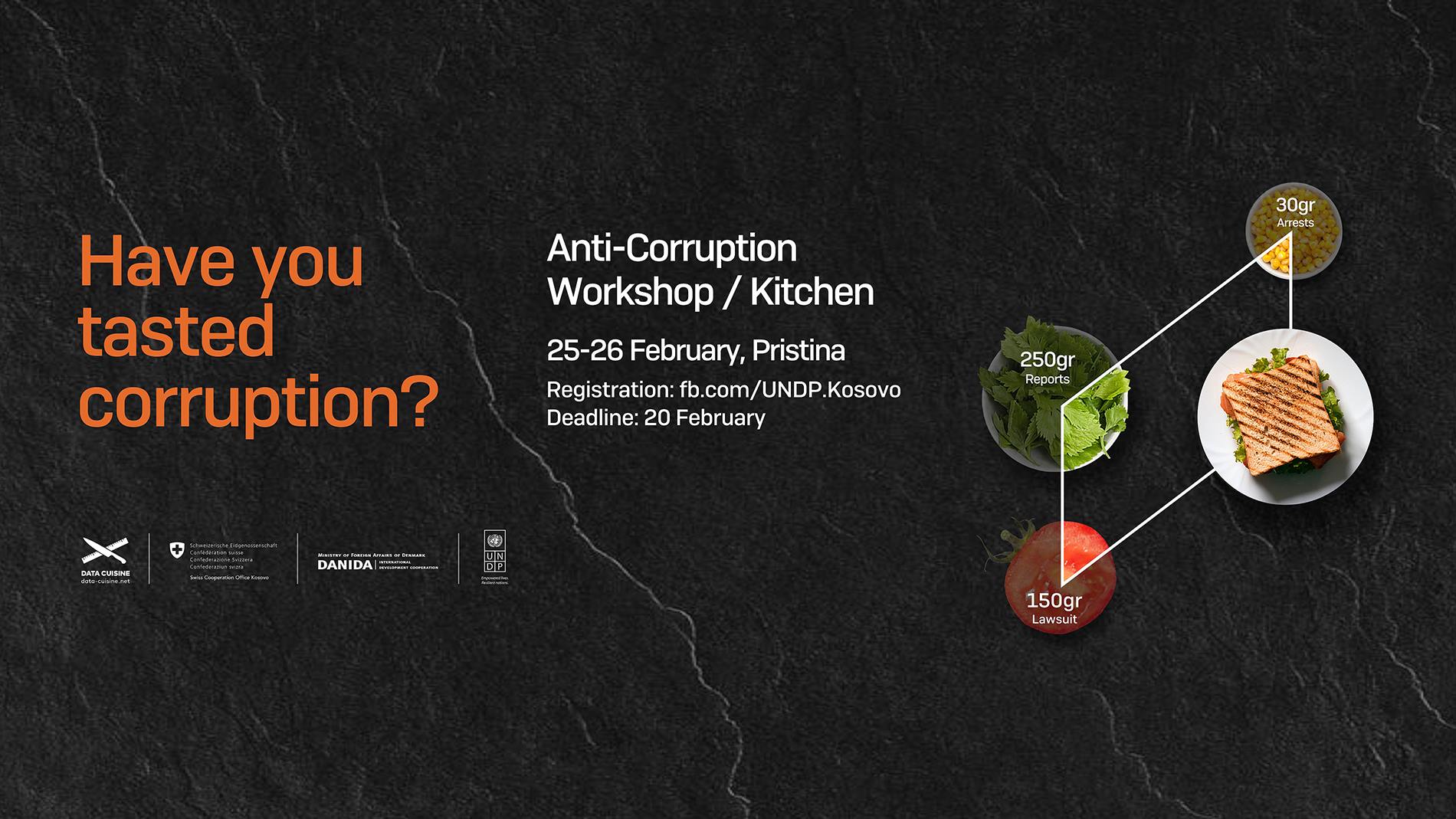
Translating rows of data into easy-to-read maps or comprehensive diagrams is one way of bridging the gap between dry numbers and the public. But why not going one step further and translating data into an even more sensual experience that we are all familiar with – like food? This is the basic idea of the Open Data Cooking Workshop. People who like to cook (and eat) are given an opportunity to explore both the local cuisine as well as local data by translating data into cooking recipes and meals. As much as this sounds fun, this collaborative research is supposed to give people concrete insights into the quality and diversity of the locally available data and teaches them principles of data representation. Through the very personal, emotional and sensual activity of cooking food they get involved with the material, be it vegetables or numbers.

After all, it looks like one of the challenges of the Open Data movement–next to opening up relevant data that citizens can relate to in a personal way–is to give people tools, methods and media enabling them to interpret, individualise and express data in an emotional way.

“Urban Media Cultures” is out now

Whether computer-animated light installations, light projections or mechanical media surfaces, it is impossible to imagine contemporary architecture without media facaes. The recently published volume “Urban Media Cultures” discusses the potentials of the development of mediated urban spaces in a spatial and social context. International experts from the fields of marketing, technology and culture, e.g. Susanne Jaschko from “prozessagenten”, Kerstine Budde from “A wall is a screen”, Marc Tamschick, Hank Hausler and many others explain the major developments in urban media and take a look at what the future holds. Published by Susa Pop, Ursula Stalder, Gernot Tscherteu and Mirjam Struppek. Av Edition, in English and German, ISBN-10: 3899861698

_____

Ob computeranimierte Lichtinstallationen, projizierte Leuchtflächen oder mechanische Medienoberflächen: die Medienfassade ist aus der aktuellen Architektur nicht mehr wegzudenken. Der frisch herausgegebene Band “Urban Media Cultures” diskutiert die Potentiale dieser medialen Stadtentwicklung im räumlichen und sozialen Kontext. Internationale Experten aus den Bereichen Marketing, Technologie und Kultur, wie z.B. Susanne Jaschko von “prozessagenten”, Kerstin Budde von “A wall is a screen”, Marc Tamschick, Hank Häusler und viele mehr informieren den Leser über die Entwicklungen der urbanen Medien und wagen einen Blick in die Zukunft. Unterteilt in die Kapitel Stadtentwicklung, Technologie, und Vermarktung zeigt das Buch anhand zahlreicher Beispiele aktuelle Tendenzen der interaktiven, städtischen Mediensysteme. Herausgegeben wird der Band von Susa Pop, Ursula Stalder, Gernot Tscherteu und Mirjam Struppek. Av Edition , in Englisch und Deutsch, ISBN-10: 3899861698

Almost a prozessagenten manifesto

When visiting Zurich, Switzerland last week, I met Adrian Notz, the director of Cabaret Voltaire.

Cabaret Voltaire was founded 1911 by Hugo Ball und Emmy Hennings, Hans Arp, Tristan Tzara and Marcel Janco and became quickly the home of DADA. Today, the place hosts one of the few really nice little cafés in Zurich, a shop and most importantly, an exhibition and event space. Cabaret Voltaire produces a program that explores notions of contemporary DADA and I was impressed by the degree of well-ordered chaos and spontaneity that characterized the current show Al Dadaida: The Revolution to Smash Global Capitalism.

At the end of our meeting, Adrian gave me some gifts, items available at the shop, which I only took a closer look at when having returned to Berlin. Among them was a little book that I started reading immediately, since I found the title extremely promising –Merz World: Processing the complicated order. In it is an interview of Yona Friedman whose work I appreciate a lot and Hans-Ulrich Obrist. I was fascinated by Friedman’s perspective on Kurt Schwitters’ Merzbau–a work of art I was deeply impressed by already when I studied art history. Now that I am occupied with processes of art and design, this early fascination of mine makes total sense.

If permitted, I would just copy the whole interview and make it available completely. But you know how it is, and so I decided to make available a couple of quotes that i found most inspiring with regard to the work and conceptual basis of prozessagenten. In some instances it really comes close to a potential prozessagenten manifesto.

Yona Friedman:

What is most interesting for me in the Merzbau is what I would call a ‘Merz Principle.’ The Merz Principle means a random agglomeration of things that form a whole. I think this Merz Pinciple exists in everything. But first I have to clarify certain basic concepts:

Reality around us is not isolated facts, but rather processes. It is very important that is is not one part of the process that is interesting for us, but the process as a whole. The problem in particle physics is mathematical models. Mathematical models are absolutely perfect, except that they are unable to describe a process. They are conceived in order to get results. Now, in reality we are not really curious about the results except in engineering, for approximations, but we are interested in processes. A process can be described only and exclusively by its history, by a linear presentation. It means that we can have a different, less mathematical, and more precise presentation of the world around us by sequential description.(…)

The second term that I use differently to the term of ‘complexity’ is the term ‘complicated order.’ In complexity, extreme complexity, you have for example, a finite number of elements; where there is a direct relation between all of them, there will be only a finite complexity, a finite number of elements. In complicated order it is different. The complicated order is not a graph but a funny curve, which can go any way. Again: it is a one-dimensional relation, but for a finite number of elements I have infinite possible complicated orders. This is a very big difference. And what we meet is the complicated order.(…)

This complicated order is more far more general than we think. My dog is a very intelligent being. He lives in a world where he is not using mathematical formulas at all, but he completely understands the world and shows absolutely healthy reactions. What I want to say is that you cannot describe behavior by mathematical formulae, except as sequences.

The difficulty with the city, with architectural products, is that they are based on behavior. Without the behavior of the user they are not complete. The only thing that completes them is that they are used. A building that has no users is not a building. It is a ruin. This shows that in architectural cities the planners are supposed to do something to satisfy the complicated order of behavior. But this is impossible because (…) It is erratic. That means one step of somebody’s behavior does not give us the slightest information about what will be his next step. It can be anything.

Intelligence starts with improvisation an this is true in every field.(…) A good example is science: Newton and Einstein were improvisers. They had ideas born through improvisation. Only then was their work to find mathematical justification. So in this kind of work we improvise inside an erratic world and then, after that, we try to rationalize. And I think this is important as a principle because in classical architecture, in functionalist architecture, everywhere, it is first presented by the rational aspect. But it is in fact the rational aspect that should come afterwards.

First of all, it is an image–i don’t like the word ‘vision’–that creative people build. They build this image and they rationalize after. Very often the poverty of architecture is based on the fact hat we start with words, with theory, with the paper. We have to have the image in our head before putting it on paper.(…) In addition to this, again, the image is a continuous process. I am sure that Schwitters didn’t see in advance what he was going to do. It developed step by step. It was a sequence, and it is a pity that it couldn’t be recorded as a sequence. And I think, evidently, that the city is like this: it is a process, it is not a product. Architecture is this way. Science is also this way, and so on. And now another factor comes in: the process is emotional. It is not rational. We rationalize art. And it may be that I am not right.(…)There is no final state, it is a long, ongoing process. In this ongoing process everybody is participating, not only the architect.(…)

My personal experience is that the most one can do is trigger a process. The process goes its own way, but you have to start it.(…)

Also, I don’t talk about works of art, I talk about processes of art. We know that the public completes the work of art with its associations. I find it almost more reasonable that you make a work of art, and somebody adds something to it. From your point of view this might be an error of aesthetics. But it is not an error from the human point of view.


Der Garten als riskanter Raum für ineffiziente Forschung

1861 erbautes Palmenhaus des Botanischen Gartens Schöneberg

prozessagenten planen für April/Mai 2013 das Projekt ‘THE GARDEN LABORATORY. Temporäres Gartenlabor für ineffiziente Forschung’ in Kooperation mit der Berliner Kunst- und Kulturförderung District. District hat ihren Sitz in der ehemaligen Mälzerei in Tempelhof, einem Industriegelände am gefühlten Stadtrand Berlins. Das besondere Interesse Districts gilt künstlerischen Ideen, die sich mit dem urbanen Raum sowie Formen seiner Aneignung beschäftigen und das Soziale neuartig begreifen.

THE GARDEN LABORATORY bietet Künstlerinnen und Künstlern eine lebendige Plattform für aktuelle künstlerische Forschungsprojekte, die den Garten als einen riskanten, provokanten, imaginativen und politischen Raum in den Fokus nehmen. In dem temporären Gartenlabor begegnen sich Künstler/innen, Wissenschaftler/innen und Besucher/innen, tauschen sich aus und von lernen einander. Mit seinem Schwerpunkt auf „ineffizienter“ Forschung, also einer Forschung, die nicht den Anspruch wissenschaftlicher Effizienz oder unmittelbarer Nützlichkeit folgt, ergänzt THE GARDEN LABORATORY den aktuellen Diskurs zu Nachhaltigkeit, Urbanität und Krisenbewältigung um eine eigenständige Position.

 Das Gartenlabor macht künstlerische Forschungs- und Produktionsprozesse transparent sowie Prozesse in der Natur unmittelbar erlebbar und ermöglicht so die Bildung eines differenzierten Verständnisses von Natur. Partizipation und Wissensvermittlung über Seminare, DIY-Workshops und eine Blog sind wichtige Bestandteile des Projektes.

Mit dem Thema Garten hoffen wir nicht nur ein kunstinteressiertes Publikum anziehen zu können, sondern auch ein Publikum, das sonst eher nicht Ausstellung zeitgenössischer Kunst besucht. Der Standort von DISTRICT im Bezirk Tempelhof mit seinen vielen Gartenkolonien und dem Gemeinschaftsgarten auf dem Tempelhofer Feld ist hierfür ideal.

_____

prozessagenten are planning the project ‘THE GARDEN LABORATORY’ in cooperation with District. The District Arts and Cultural Promotion is located on the grounds of a former malthouse in Berlin Schöneberg/ Tempelhof. The aim of the platform is to promote art and culture, in particular artists and artist collectives that reflect contemporary issues from a critical position. The focus of District’s interest rests on artistic ideas that deal with urban space and forms of its appropriation as well as a new understanding of social issues.

THE GARDEN LABORATORY offers artists a platform for their current artistic research projects that explore the garden as a risky, provoking, imaginative and political space. Artists will meet artists, scientists and visitors at the temporary garden lab and will exchange ideas, knowledge and perspectives. With its focus on ‘inefficient’ research, i.e. research that neither meets the standarts of scientific research nor the requirement of immediate usability, THE GARDEN LABORATORY complements the current discourse on sustainability, urbanity and crisis.

The garden lab elucidates artistic research and production processes and translates natural processes into sensual experiences. It promotes a differentiated understanding of nature and invites visitor participation in DIY workshops, seminars and a blog.

‘Data Cooking’ or ‘How to make a real pie chart and other data dishes’

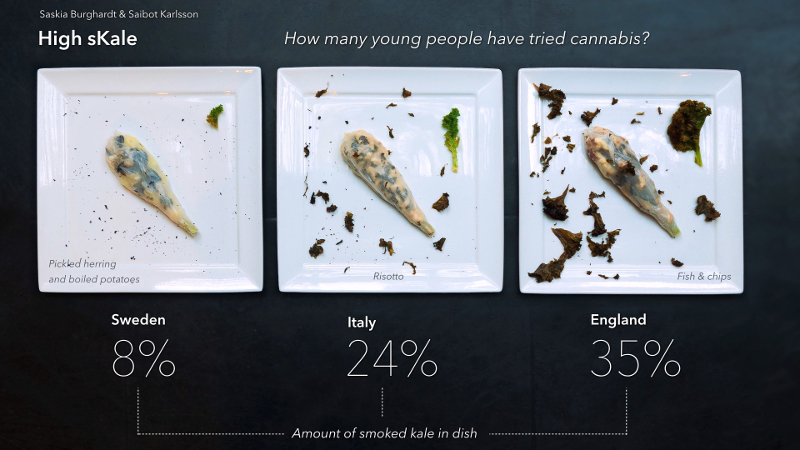
Have you ever tried to imagine how a fish soup tastes whose recipe is based on publicly available local fishing data? Or what a pizza would be like if it was based on your cities population mix? Do you want to know how public data could relate to cooking? Can you imagine to push the paradigms of data representation to the extreme by applying the principles of your local cuisine?

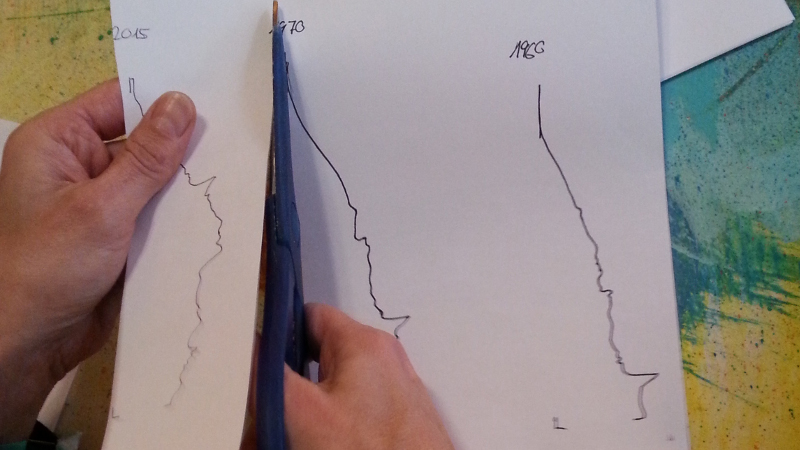
Then you should consider participating in the ‘Data Dinner Workshop’. It combines the representation of local open data with cooking. The workshop aims at researching ways to represent data on a multi-dimensional sensory level by exploring the inherent qualities of food such as colour, form, texture, smell, taste, nutrition, origin etc. It offers to its participants the opportunity to translate concrete numbers, i.e. local open data, into concrete matter, i.e. a menu, thereby gaining unexpected insights into both media and learning about their principles and relations.

The workshop is designed as a series of collaborative and experimental research experiences, blurring the boundaries between teachers and participants, data and food. At the end of each workshop, an open data menu and cookbook will be created.

The workshop series is organised by us in collaboration with Moritz Stefaner. Moritz is a well-known information visualizer focusing on information aesthetics and interactive visualization. He holds a B.Sc. in Cognitive Science and an M.A. In Interface Design. In each city where the workshop takes place a local chef will be teaching together with Moritz.

If you want to become involved, host a workshop or participate, please contact us.

Ein ‘wanderndes Nest’ auf und an der Isar

prozessagenten nehmen an dem öffentlichen Wettbewerb ‘Aspekte der Gestaltung und des Designs im öffentlichen Raum’, ausgerufen von der Stadt München, teil. Wir schlagen vor, den Raum der Isar, der heute in erster Linie als Erholungsraum und zur Energiegewinnung dient, auf sein Potenzial als Ort des Wissenstransfers, der Inspiration und Veränderung zu untersuchen. Wir haben ein Projekt konzipiert, das konkret die Gestaltung des innerstädtischen Lebensraums Isar thematisiert, mehr noch, das Möglichkeiten der aktiven Teilnahme an der Gestaltung dieses öffentlichen Raumes bietet. Wir stellen nicht die rein visuelle Gestaltung in den Vordergrund, sondern haben ein Szenario für eine tiefgreifende, nachhaltige Gestaltung entwickelt. Hier bietet wir Einblick in unser Konzept:

Flüsse sind kein klassischer Raum für die Ausstellung und Ansiedlung von Kunst und Design, werden aber immer häufiger zur Präsentation von Kunst genutzt. Beispiele hierfür sind ‘Drift’ auf und an der Londoner Themse oder ‘Emscherkunst.2010′.

Flüsse sind kulturhistorisch aufgeladene Orte. In der Vergangenheit waren sie die Lebensadern der Städte, bildeten wichtige Transport- und Handelswege und damit auch Orte des sozialen Lebens, des Kulturtrans­portes und -austausches von einer Region zur nächsten. Flüsse sind damit aus historischer Sicht Informationskanäle, in denen Wissen von einem Ort zum nächsten fließt. Heute sind viele Flüsse, wie auch die Isar, durch menschliche Eingriffe wie das Einbringen von Stauanlagen, Flusslaufbegradigungen oder Kanalbau nicht mehr schiffbar. Diese Wasserwege haben damit ihre einstige Funktion als Teil eines nationale Grenzen überschreitendes kulturellen Netzes, in dem Information frei fließt, verloren. Trotzdem fließt in jedem Fluss natürlicher Weise Information: Das Wasser ist das Medium, der Datenträger sozusagen: Seine stoffliche Zusammensetzung, Fließgeschwindigkeit, Temperatur, sein Volumen und Fischbestand ist abhängig von dem, was sich anderenorts ereignet. Der Fluss ist damit ein von Experten und Laien lesbares, ständig in Veränderung befindliches, also prozessuales Medium.
Hier setzt unser Konzept an: Die Isar, selbst von prozessualer Natur, wird zum Ausgangspunkt für ein künstlerisches Projekt, das im Herbst 2012 an oder bzw. auf der Isar stattfindet und speziell für diesen öffentlichen Raum konzipiert wurde. Für die Untersuchung und prozessuale Gestaltung dieses Raumes haben wir die beiden Designerinnen/Künstlerinnen Myriel Milicevic (Neighbourhood Satellites) und Dana Gordon eingeladen, kollaborativ ein Konzept zu entwickeln.

Das aus dieser Zusammenarbeit hervor gegangene Projekt Migratory Waldrapp Nest (Wanderndes Waldrapp Nest) entwirft die Vision eines innovativen Umgangs mit natürlichen Ressourcen und einer ausgeglicheneren Balance zwischen Mensch, Technik und Natur. Die Isar ist nach der abgeschlossenen Renaturierung im innerstädtischen Bereich der ideale Standort dafür, ist doch die Zurückführung des Flusses in seine natürliche Form ein deutlicher Schritt in Richtung eines neuen Umgangs mit der Natur und bildet das Isarufer weiter als sozialen Raum in der Stadt aus.

Das Projekt schlägt einen Bogen von architektonischer Intervention über Design zu bildender Kunst und untersucht den öffentlichen Raum der innerstädtischen Isar mit interdisziplinären Mitteln.

Milicevic und Gordon haben ein mobiles Observatorium entworfen, das im Herbst 2012 an der Isar die Möglichkeit zur Naturbeobachtung und zum Wissensaustausch und -vermittlung bietet.

Das Konzept der beiden Designerinnen ist von der Geschichte des Waldrapp inspiriert, eines Vogels, der bis vor rund 300 Jahren entlang der Isar zog, dann aber in Zentraleuropa ausstarb. Ein Hinweis auf historische Vorkommen sind alte Flur- und Geländenamen. Noch heute verweisen in den bayerischen Voralpen (und nicht nur dort) solche Namen auf frühere Vorkommen des Waldrapps: Rappenköpfe, Rappenspitze, Rappenklamm, Rappenschrofen, Rappenbach, Rabenkopf und Rappinschlucht, allesamt im Isarwinkel und Loisachtal. Nach seinem Rückzug aus Zentraleuropa wurde der Waldrapp zur mythischen Figur, bis er 1897 in Nordafrika wiederentdeckt wurde. Heute ist diese besondere Ibisart auch in seiner neuen Heimat vom Aussterben bedroht.

Milicevic und Gordon nehmen den Waldrapp als Ausgangspunkt für ihr Projekt, ist er doch ein Symbol der Migration, der Verdrängung aus seinem angestammten Habitat, aber auch ein mythischer Vogel, ein Protagonist fantastischer Geschichten. Daraus entwickelten Milicevic und Gordon die Idee eines wandernden Nestes, das gleichzeitig Skulptur und Architektur, Fantasieraum und funktionales Observatorium ist. Gemeinsam mit den Münchenern begeben wir uns auf die Suche nach dem Waldrapp und holen den Vogel in wahren und fiktiven Geschichten an die Isar zurück.

Dieses ‘wandernde Nest’ wird am Ufer der Isar fest installiert. Es ist täglich von Sonnenaufgang bis zur Abenddämmerung für Besucher geöffnet. Die besondere Bauweise der Architektur (ein kegelförmiges Dach ohne festen Boden, mit außen angebrachten Pontons) macht sie mobil: Sie soll mindestens einmal ihren Standort wechseln und sich, wie ein Floß gesteuert, über die Isar von einem Ort zum nächsten bewegen.

Äußerlich erinnert die Architektur an einen Hügel, auf dem Vögel nisten können: Zahlreiche Nestlöcher in der vegetativen Hülle bieten sich dem Waldrapp (und anderen in Kolonien lebenden Vögeln) als Brutplätze an. Der innere Durchmesser des ‘Nestes’ beträgt 8 m, so dass sich bis zu 20 Leute darin aufhalten können. Abends wird das ‘Nest’ geschlossen, so dass kein Missbrauch möglich ist.

Im ‘Nest’ können Besucher die eigens von Milicevic und Gordon gestalteten lowtech Apparaturen benutzen und – im buchstäblichen Sinne des Wortes – den Blick auf das Leben an und in der Isar lenken: Zum Beispiel das Ibisskop, eine Art Periskop/Teleskop, mit dem man nach dem Waldrapp (und anderen Tieren) Ausschau halten kann. Das Ibisskop kann zwischen dem realen Bild und darüber gelegten Bildern vom Waldrapp wechseln. Mit einem anderen Objekt kann man dem Gesang des Waldrapp lauschen, aber auch Geschichten ‘einfangen’, in denen der Vogel vorkommt. Mögliche Futterplätze des Waldrapp sollen von den Besuchern gefunden und auf Karten eingezeichnet werden. Es gibt sowohl Instruktionen für einen Waldrapp-Willkommestanz als auch Waldrapp-Masken zum Aufsetzen.

Das ‘Nest’ steht lokalen Organisationen wie dem Bund für Naturschutz und Initiativen wie ‘Meine Isar’ zur Benutzung offen und wird durch Partnerschaften mit diesen zu einem lebendigen Ort. Denkbar sind zum Beispiel der Besuch des ‘Nestes’ innerhalb von Führungen, Mini-Workshops und dessen Einbindung in die Öffentlichkeitsarbeit. Gemeinsam mit diesen Partnern werden die wir solche edukativen Programme aufsetzen und an die breite Öffentlichkeit, aber auch gezielt an Schulen, herantragen. Ziel ist es, das ‘Nest’ zu einem temporären, aktiven Ort zu machen, gleichzeitig aber zu gewährleisten, dass die natürliche Umgebung nicht durch diese Aktivitäten gestört wird, was ist durch die Art der Partnerschaften gewährleistet ist.

Das Projekt wird auch von den Designerinnen mit einem ausführlichen Workshopprogramm begleitet: In einem Kreativworkshop werden Jugendliche angeleitet, lowtech Geräte zur Naturbeobachtung und -dokumentation zu entwerfen und zu bauen. In weiteren Workshops mit Kindern/Jugendlichen und Erwachsenen wird dem sagenumwobenen Vogel nachgegangen. Gemeinsam werden fiktionale Habitate für den Waldrapp entworfen, Konzepte und Folgen der Migration von Tier und Mensch diskutiert. Die Ergebnisse dieser Workshopreihe werden on- und offline festgehalten, insbesondere in Form eines Buches und einer Projektwebsite, welche das Projekt in Teilen auch nach seiner Beendigung erlebbar machen.

Die temporäre Architektur des ‘wandernden Nestes’ wird unter dem Aspekt der Nachhaltigkeit geplant und gebaut, dh. mit natürlichen und recyclebaren Materialien realisiert. Ziel ist es zudem, das ‘Nest’ nach Abschluss des Projektes in München entweder entlang der Isar wandern zu lassen oder die Struktur einer anderen Nutzung zukommen zu lassen.

Imagine a work of art…

Sometimes when I am daydreaming I dream of an artwork. An artwork that has not yet come into being. An artwork that at this point exists only in my mind, or maybe in yours too. Maybe you too have thought of it already. If not, and you continue reading, I might plant the idea of this artwork also in your mind, where it will grow and change, and take different shapes. And this would make sense, because the artwork I am daydreaming of is a process.

Imagine the place you live at–the house, the street, the neighbourhood, the city. You have lived there for a while. It’s all familiar to you. You know the place, and everyday you see some change happening. The security guard never stands at exactly the same spot, the plastic bag that got entangled in the branch of the tree in front of your house becomes more an more torn, the neighbour who hardly greeted you last Saturday, today looks at you with a quirky smile. But also bigger changes happen. One morning you wake up and there is this bulldozer blocking your street and you’ll learn that you have to live with noise and dust for the next six months. And on the billboard across the street they put up a shocking poster asking for donations to the victims of the earthquake and nuclear pollution in Japan.

All this is happening around you, and you are a part of it, because you change too. Everything is in constant motion, in development, at different speeds, directions and levels of complexity.

Imagine an artwork that shares these qualities. An artwork that like you is connected to what happens around it, that is part of your life just like the tree with the plastic bag. An artwork that is there every day, but that changes and moves, driven by what happens locally or far away. A public artwork even that you share with others, that has a meaning to them too. A piece of art that defines a place and gives it its identity as much as the people, events and things around. A process visible or audible or sensible and woven into the the fabric of the city, your home, your surroundings. A subtle thing that you can notice, if you feel like, or ignore if your mind is occupied with other things, something you can talk about with your neighbour, just like you talk with her about the ever changing weather.

It might take art another fifty years to produce this piece, and if it ever comes into being it will certainly be made with ‘new’ media, whatever this then may be: electronic and digital or organic and living or any other material enabling process, flux and change. Perhaps I am sentimental thinking that art can add something to life that is more than an intellectual challenge, a single emotional and sensory event, a self-contained story, a cathartic intervention or an beautiful object. In fact, it was this hope for ‘more’ that drew me into media art in the first place. This happened in the mid 1990s, when interactivity and net.art started to spread and there was a handful of festivals energized by experimentation, invention and the idea of a new culture and society.

Even if the digital revolution did not turn society around in the way idealists were hoping, it has had a massive impact on the way we live. Unnecessary to repeat what the computer and internet did to communication, the global spread of information, the grasp of time and space, the concept of authorship etc. The cultural change is so deep and ongoing, that we cannot extract ourselves from it to assert its consequences in its entire complexity and completeness.

To art, technology has brought among other things basis on time and process. The first describing the development of a narrative, a sequence of events in an artwork in relation to progressing time, the second referring to the openness of a time-based development, a certain degree of self-organization and performativity.

The next step–one that has not yet been taken in art–is the combination of duration and process, a concept that is intrinsic to living systems. This change without ceasing, the continuous transition from one state to the other, is what Henri Bergson describes as the the property of human existence in the first chapter of ‘Creative Evolution’.

Bergson, Henri, Creative Evolution. Henry Holt and Company, New York, 1911.

This article was published in INTER, art actuel 109, Les Editions Intervention, Quebec City, Canada, September 2011.

Blog now active

The blog accompanies our work. Here we speak in detail about our own activities and discuss projects in our network.

__________

Der Blog begleitet unsere Arbeit und ist unser Sprachrohr. Hier berichten wir über eigene Aktivitäten und stellen Projekte im unserem Netzwerk vor.